English
 中文简体
中文简体 Español
When you browse offerings from various Motorcycle Cover Manufacturers, you'll often see that Motorcycle Covers are marketed for “UV protection” and “waterproofing.” But how exactly do these covers defend your bike against sun damage and rain?
Why UV and Rain Matter for Motorcycles
The Threats of UV Exposure
Ultraviolet (UV) radiation from sunlight can be surprisingly damaging to motorcycles over time. UV can:
Fade paint, plastics, and decals
Degrade rubber parts (tires, hoses, seals)
Accelerate oxidation or chalking on surfaces
Cause interior components (like gauges or seats) to discolor or crack
Many motorcycle owners underestimate how quickly repeated sun exposure takes a toll. A good Motorcycle Cover with UV protection becomes a initial line of defense.
Rain, Moisture & Corrosion Risks
Rain or high humidity pose another set of challenges:
Persistent moisture can cause to rust and corrosion on metal parts
Water intrusion in crevices can degrade wiring, bearings, or connections
Condensation under a cover can trap moisture, causing to mold or pitting
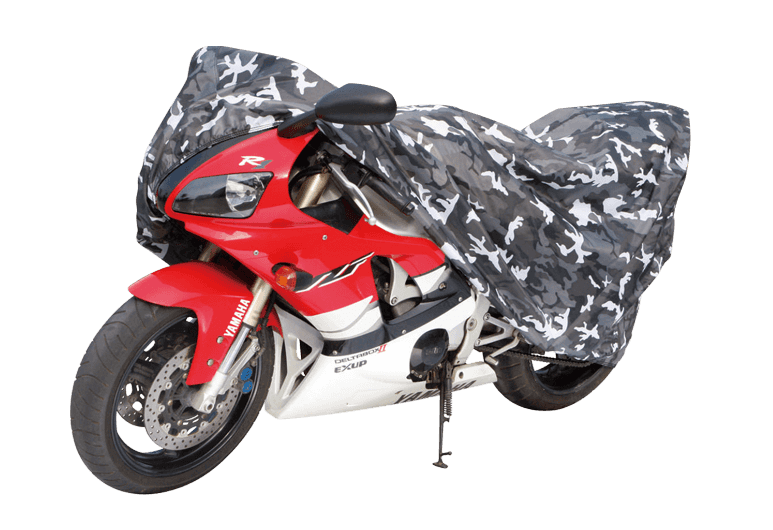
Design Principles That Enable UV & Rain Protection
Material and Coatings
UV-Resistant Fabric
To resist UV degradation, quality covers often use fabrics embedded with UV stabilizers—such as titanium dioxide or other additives—that absorb or reflect harmful wavelengths. Some covers even incorporate reflective or metallic outer layers to bounce sunlight away.
Waterproof or Water-Repellent Treatments
Manufacturers usually apply a durable water-repellent (DWR) coating or lamination to the cover fabric. This treatment causes water to bead up and roll off rather than soaking in. In more advanced covers, a waterproof membrane (e.g. microporous film) may lie between outer shell and inner liner layers.
Structural Design Features
Seam Sealing & Overlaps
Even if the fabric resists water, seams are vulnerable. High-quality covers incorporate one or more of:
Taped or welded seams
Double stitching with water-resistant thread
Overlapping covers edges to prevent direct paths for water ingress
These practices reduce the chance of water working its way in at stitch lines.
Ventilation / Breathability
To prevent condensation under a cover (which can negate waterproofing), smart design includes:
Vent ports or mesh vents strategically placed
Floating flaps or air channels to allow internal air exchange
Breathable inner liners that wick moisture outward
Application & Usage ideal Practices
Positioning and Tensioning
Ensure the cover is taut, so rain flows off rather than pooling
Avoid loose areas or sagging surfaces where water can accumulate
Use built-in straps or anchors to stabilize the cover
Waiting for the Bike to Cool
After riding, some components (exhaust, engine parts) remain hot. It’s wise to allow a few minutes of cooling before covering the bike to prevent potential damage to the inner liner or coating.
Cleaning and Reapplication of Coatings
Periodically wash your cover gently (mild soap, no bleach)
Reapply DWR or waterproofing sprays after washing if water stops beading
Inspect for wear in high-exposure zones (e.g. top surface, edges)
Frequently Asked Questions
Q: Can a cover labeled “waterproof” trap moisture underneath?
Yes—if ventilation is inadequate, even a waterproof fabric may trap condensation beneath. That’s why breathable design is so important.
Q: How do I know a cover’s UV protection is effective?
Ask for technical data such as “UV block percentage,” fabric rating, or usage of UV-stabilizer additives. A cover that fades, discolors, or becomes brittle quickly has poor UV defense.
Q: Will prolonged rain exposure eventually degrade the cover itself?
All covers have limits. Over time, UV, pollutants, and repeated wet–dry cycles may degrade coatings or stitching. Choosing from reputable Motorcycle Cover Manufacturers and doing maintenance helps extend life.